Rare Corvettes · One of one
The Corvette Manta Ray
The Manta Ray is one of the most famous Corvette show cars ever built — and it was never really built at all. It was the Mako Shark II, sent back to the studio in 1969 and reborn under a new name, the last act of Bill Mitchell's obsession with the sea.
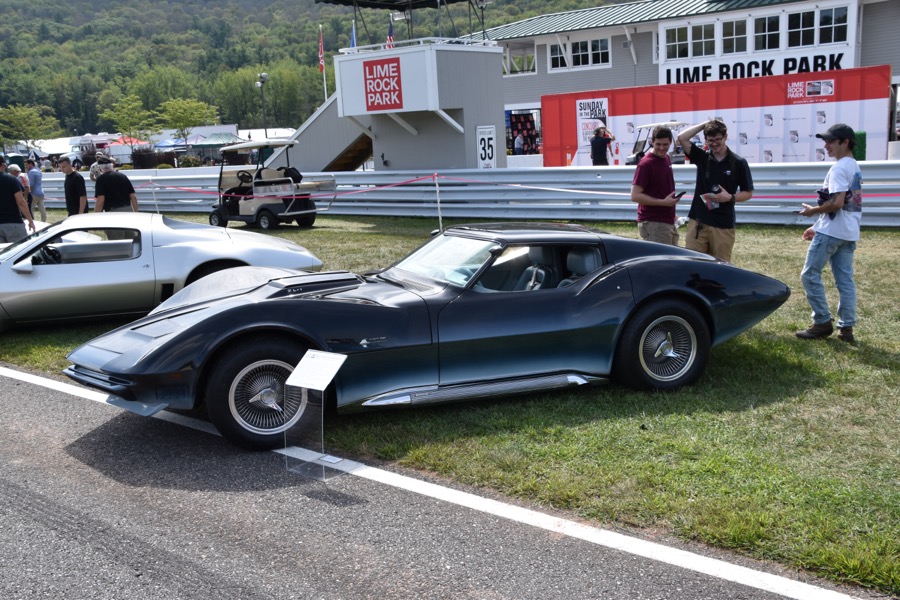
Bill Mitchell named his Corvettes after the things he chased with a rod and reel. The production Sting Ray came first; then the Mako Shark I and II, the show cars whose shape became the entire C3 generation. The Mako Shark II, styled by Larry Shinoda under Mitchell, was the single most influential Corvette concept of the 1960s. And when its show-circuit life wound down, GM didn't retire it — they reinvented it one more time.
One car, code XP-830, two names
In 1969 the Mako Shark II was returned to GM Design and transformed. The studio added a front spoiler, redesigned the grille and the external side-exit exhaust, fitted a dramatic buttress-style rear window, and stretched the tail into a longer, more horizontal shape that hinted at where Corvette styling was heading in the 1970s. Under the hood went a new, all-aluminum ZL-1 427 — the most exotic engine GM built, officially rated at a suspiciously modest 430 horsepower. The reborn car wore a new name that kept Mitchell's ocean theme alive: Manta Ray.
Manta Ray at a glance
- Built: one — the 1965 Mako Shark II (XP-830), rebodied in 1969
- Engine: all-aluminum ZL-1 427 V8, rated 430 hp (deliberately understated)
- New for '69: longer tapered tail, buttressed rear window, front spoiler, revised side exhaust
- Theme: the third of Mitchell's marine predators — Sting Ray, Mako Shark, Manta Ray
- Today: part of the GM Heritage Center collection
The end of a bloodline
Because it began life as the Mako Shark II, the Manta Ray carries the same internal code, XP-830, as the car that fathered the C3. That makes it something rarer than a one-off: it is the final state of the most important show Corvette of its era, the shape that dictated a decade of production cars, wearing its last and most elegant body. When people say the Corvette's styling came out of Bill Mitchell's fishing trips, this silver car with the long tail is where the story ends.