People · Zora Arkus-Duntov · Chapter 6 of 11
The Ban
Sebring, Florida — March 1957
The blue car in the Chevrolet garage looks like it flew in from 1962. Project XP-64 — the Corvette SS — is Zora's six-month moonshot: a purpose-built racer with a tubular spaceframe inspired by the Mercedes 300 SLR, a fuel-injected 283 breathing through aluminum heads, and bodywork of magnesium, thinner and lighter than anything Detroit has ever raced. Beside it sits its scruffy sibling — the development mule, cobbled in fiberglass — and around the mule, two of the greatest racing drivers who ever lived are grinning like schoolboys.
Juan Manuel Fangio, reigning world champion, takes the mule out in practice and laps Sebring in 3:27.2 — quicker than the pole time from the year before. Stirling Moss follows at 3:28.2. Neither is entered to race it (both asked out of early contracts when the build ran late), but the message of those two laps electrifies the paddock: the Americans have built something real.
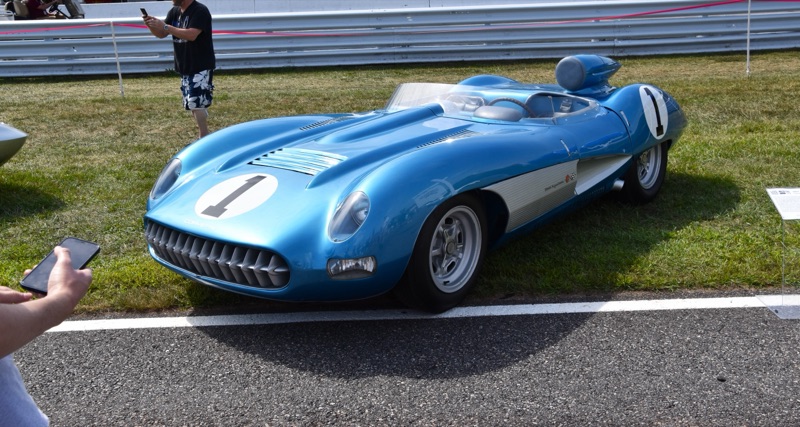
The race itself is 23 laps of promise and one small, fatal detail. With John Fitch and Piero Taruffi sharing the wheel, the SS runs with genuine pace — then wilts as the brutal Sebring surface finds the one flaw: a rubber bushing in the rear suspension, improperly installed in the scramble to make the grid, lets the rear axle dance. Handling gone, the car retires before sunset. Painful — but everyone in the garage knows what they have. The plan is already written: sort the car, then take three of them to Le Mans in June. Fangio is interested. Zora, who knows the Mulsanne personally, can already see it.
Detroit — June 1957
The guillotine falls from an unexpected direction: not Ferrari, not Ford — America's own boardrooms. That spring, under political pressure over highway deaths and horsepower marketing, the Automobile Manufacturers Association resolves that its members should withdraw from racing entirely — no factory teams, no speed advertising, no records. By June 1 it is corporate law at General Motors. The SS program — car, mule, Le Mans dream — is dead on the spot. The most advanced American race car of its generation has a career of exactly 23 laps.
Zora had escaped the Bolsheviks and outrun the Wehrmacht. He was not going to be stopped by a memo.
The skunkworks years
What follows is one of the great sustained acts of corporate subversion in automotive history — conducted in plain sight, with a straight face, for five years. Racing is banned; research is not. So Zora becomes a researcher.
Exhibit A: the CERV I — the Chevrolet Engineering Research Vehicle — begun in 1959 and unveiled at Riverside in November 1960. It is, officially, a laboratory for studying suspension and structures. It is, obviously, a single-seat racing car with its engine behind the driver — an open-wheeler with Indianapolis in its bones, testing lightweight V8s, exotic materials, even fuel injection at altitude on Pikes Peak. Every lesson is filed away under the heading of the layout Zora now believes is the Corvette's destiny: engine in the middle.
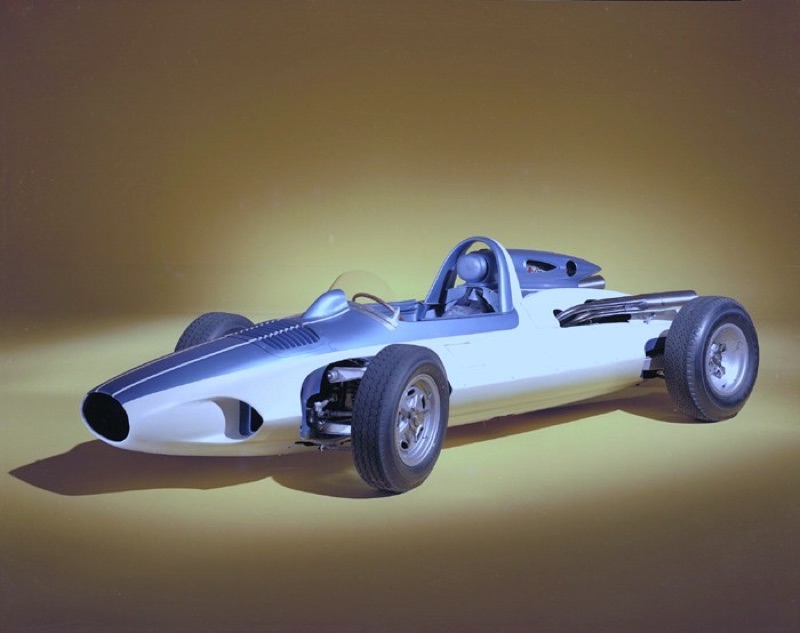
Exhibit B wears someone else's name. Bill Mitchell — Earl's successor as GM design chief, a man who loves racing as much as he loves chrome — quietly acquires the SS mule's chassis, has young designers Larry Shinoda and Peter Brock skin it in a stunning new body, and goes club racing "privately" as the Stingray Racer, with dentist-racer Dick Thompson driving it to an SCCA championship in 1960. Zora's fingerprints are nowhere on the paperwork and everywhere on the car. And its shape — Mitchell's shark-in-motion fantasy — is the future of the production Corvette, hiding at regional race tracks. (Full story: Mitchell's own account of the Stingray Racer.)
By 1962, the pieces are converging: the racer's shape, the researcher's chassis lessons, a fat new 327 V8, and half a decade of pent-up intent. The car they become will be the most celebrated Corvette ever built — and it will drag its two fathers into open war over, of all things, a strip of fiberglass.